 Supplements
Phosphatidylserine is a phospholipid concentrated in brain cell membranes, studied for age-related memory complaints and for blunting exercise-induced cortisol. The FDA permits a qualified health claim for cognitive function while explicitly noting the evidence is limited. Our top pick is NOW Foods Phosphatidyl Serine 100 mg for hitting the studied dose from a brand that runs its own testing lab.
How We Picked
We looked for products that deliver the researched 100 mg per serving without hiding it inside a proprietary blend, disclose the phospholipid source, and come from manufacturers with real testing infrastructure. Complexes that pair PS with other phospholipids were considered separately, since they change what you are actually getting per capsule.
A. NOW Foods Phosphatidyl Serine 100 mg — Best Overall

NOW Foods Phosphatidyl Serine 100 mg
NOW Foods
- 100 mg phosphatidylserine per softgel
- Matches the per-dose amount used in trials
- Brand operates its own analytical laboratory
- Includes supporting phospholipids
- Widely available and consistently priced
Why we picked it: The classic research protocol is 100 mg three times daily, and a clean 100 mg softgel lets you follow it exactly or scale down. NOW runs one of the more serious in-house testing operations in the industry, which matters for a phospholipid that is easy to under-deliver.
B. Source Naturals Phosphatidyl Serine Complex — Best Complex
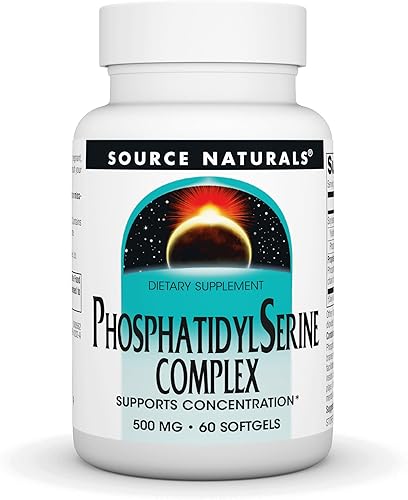
Source Naturals Phosphatidyl Serine Complex
Source Naturals
- Phospholipid complex format
- Includes phosphatidylcholine and related lipids
- Softgel form for better lipid absorption
- Long-running established formula
- Check the label for actual PS content
Why we picked it: Complexes deliver PS in a broader phospholipid matrix, closer to how it occurs in food. The important caveat is that the headline milligram figure refers to the whole complex, not the PS alone — read the panel and compare actual PS content before assuming more is more.
C. ML Naturals Phosphatidyl Serine 200 mg — Best Higher Dose
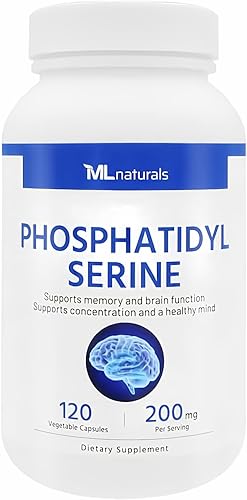
ML Naturals Phosphatidyl Serine 200 mg
ML Naturals
- 200 mg phosphatidylserine per serving
- Fewer capsules to reach 300 mg daily
- Suitable for the cortisol research dose range
- Simple formulation
- Vegetarian-friendly capsules
Why we picked it: The exercise-and-cortisol studies used 300 to 800 mg daily, which is a lot of 100 mg softgels. A 200 mg serving cuts the pill count meaningfully if you are following that higher-dose protocol rather than the classic memory one.
What Phosphatidylserine Is
Phosphatidylserine is a phospholipid — a fat molecule that forms part of cell membranes — and it is especially concentrated in the brain, where it makes up a meaningful share of total membrane phospholipid. It plays a role in membrane fluidity, cell signalling, and the process by which cells flag themselves for clearance. You get small amounts from food, with organ meats and some fish being the richest sources. Supplements are the practical way to reach the doses used in research.
An Important Detail About the Original Research
The influential early studies on phosphatidylserine and memory in the 1980s and 1990s used PS derived from bovine cortex. After concerns about transmissible spongiform encephalopathy, the industry moved to plant-derived PS from soy or sunflower lecithin. These are not identical molecules — the fatty acid composition differs. Research on plant-derived PS is more limited and results have been less consistent than the original bovine work. This is the single most important caveat in the category, and it is rarely mentioned on product pages.
What the Evidence Supports
The United States FDA permits a qualified health claim that phosphatidylserine may reduce the risk of cognitive dysfunction and dementia in the elderly, while explicitly stating that the supporting evidence is limited and inconclusive. That is a careful, honest characterization. Trials in older adults with memory complaints have reported modest improvements on memory tasks at 300 mg daily. Separately, several small studies found that PS supplementation blunted the cortisol response to intense exercise and reduced perceived stress, generally at 400 to 800 mg daily. A third line of work looked at PS in children with attention difficulties, with mixed and preliminary results.
Dosing
The classic memory protocol is 100 mg three times daily, totalling 300 mg. Exercise and cortisol studies used 300 to 800 mg daily. Benefits in cognitive trials generally emerged over 6 to 12 weeks, not days. Because PS is a lipid, taking it with a meal containing fat is sensible. There is no evidence supporting doses above 800 mg, and cost rises quickly.
Safety and Interactions
Phosphatidylserine is generally well tolerated; the most common complaints are mild digestive upset and, occasionally, insomnia when large doses are taken close to bedtime. Because it may influence acetylcholine signalling, people taking anticholinergic or cholinergic medications should check with a doctor. There is a theoretical blood-thinning consideration, so discuss it with your clinician if you take anticoagulants or are scheduled for surgery. Soy-derived PS is refined and typically low in soy protein, but people with severe soy allergy may prefer sunflower-derived versions. For adjacent options see our guides to supplements for memory and omega-3 for brain health.
Frequently Asked Questions
Does phosphatidylserine improve memory?
The FDA allows a qualified health claim that PS may reduce the risk of cognitive dysfunction in the elderly, while stating the evidence is limited and inconclusive. Trials in older adults with memory complaints reported modest gains at 300 mg daily over 6 to 12 weeks. Importantly, the strongest early results used bovine-derived PS, while modern supplements are plant-derived.
How much phosphatidylserine should I take?
The classic memory protocol is 100 mg three times daily, totalling 300 mg. Studies on exercise-induced cortisol used 300 to 800 mg daily. Take it with a meal containing fat, since PS is a lipid. Allow 6 to 12 weeks before judging cognitive effects. There is no good evidence for doses above 800 mg.
Is soy or sunflower phosphatidylserine better?
There is no strong evidence that one outperforms the other. Soy-derived PS is more common and better studied among plant sources; sunflower-derived PS exists mainly to serve people avoiding soy. Refined soy PS typically contains very little soy protein, but those with severe soy allergy may still prefer sunflower.
Does phosphatidylserine lower cortisol?
Several small studies found that PS blunted the cortisol spike following intense exercise and reduced perceived stress, generally at 400 to 800 mg daily. The trials were small and short, and the effect appears specific to acute exercise stress rather than chronic stress in general. Treat it as a promising but preliminary finding.
Quick Comparison
| Product | Key Feature | Best For |
|---|---|---|
| NOW Foods Phosphatidyl Serine 100 mg | Studied 100 mg dose, in-house tested | Best Overall |
| Source Naturals Phosphatidyl Serine Complex | PS alongside supporting phospholipids | Best Complex |
| ML Naturals Phosphatidyl Serine 200 mg | 200 mg per serving, fewer capsules | Best Higher Dose |
Bottom Line: Which Should You Buy?
For most people: the NOW Foods Phosphatidyl Serine 100 mg. Studied 100 mg dose, in-house tested
Runner-up: the Source Naturals Phosphatidyl Serine Complex. PS alongside supporting phospholipids
Also great: the ML Naturals Phosphatidyl Serine 200 mg. 200 mg per serving, fewer capsules
Ready to buy?
Jump straight to our top picks on Amazon.
Sources & Research
This article was informed by peer-reviewed research and clinical guidelines. The Supplements Corner Editorial Team reviews published literature to ensure accuracy.
Dosage Reference
Cognitive research protocols commonly used 100 mg three times daily (300 mg total) for 6–12 weeks. Exercise and cortisol studies used 300–800 mg/day. Take with a fat-containing meal for absorption. Note that the strongest early cognitive evidence used bovine-derived PS; current supplements are soy- or sunflower-derived, and evidence for these is more limited. Discuss with a doctor if taking anticoagulants or cholinergic medications.
Key Studies Referenced:
- Glade MJ, Smith K (2015). "Phosphatidylserine and the human brain. Nutrition.."
- Starks MA, et al. (2008). "The effects of phosphatidylserine on endocrine response to moderate intensity exercise. Journal of the International Society of Sports Nutrition.."
- Kato-Kataoka A, et al. (2010). "Soybean-derived phosphatidylserine improves memory function of the elderly Japanese subjects with memory complaints. Journal of Clinical Biochemistry and Nutrition.."
Medical Disclaimer: This content is for informational purposes only and does not constitute medical advice, diagnosis, or treatment. Always consult a qualified healthcare provider before starting, stopping, or changing any supplement regimen. Individual results may vary.

