 Supplements
Plant proteins can build muscle as effectively as whey, but the research suggests you need slightly more of them, and blends beat single sources on amino acid profile. Our top pick is Sunwarrior Vegan Protein Powder for a well-balanced organic multi-source blend. Pea protein is the best-studied single source and the best value.
How We Picked
We focused on amino acid completeness rather than headline protein grams. Pea protein is low in methionine; rice protein is low in lysine; combining them fixes both. We also compared leucine content, since leucine drives muscle protein synthesis and plant proteins generally supply less per scoop than whey. Third-party testing for heavy metals was a factor, as plant proteins can concentrate them from soil.
A. Sunwarrior Organic Plant-Based Protein — Best Overall

Sunwarrior Organic Plant-Based Protein
Sunwarrior
- Multi-source plant protein blend
- Organic and non-GMO
- Complementary amino acid profile
- Soy-free and gluten-free
- Mixes smoothly without grit
Why we picked it: A blend solves the core problem with single-source plant protein: no one plant supplies an ideal amino acid profile on its own. Combining sources fills the methionine and lysine gaps, and the organic sourcing is a reasonable safeguard for a crop-derived powder.
B. Vega Protein and Recovery — Best for Recovery

Vega Protein and Recovery
Vega
- Plant protein with added carbohydrate
- Formulated for post-exercise recovery
- Includes tart cherry and turmeric
- Non-GMO Project verified
- Well-regarded chocolate flavour
Why we picked it: Recovery is not protein alone — replacing glycogen matters after hard or long sessions. This adds carbohydrate to the protein rather than leaving you to sort it out separately, which is a genuinely useful format for endurance athletes.
C. NOW Sports Pea Protein — Best Value
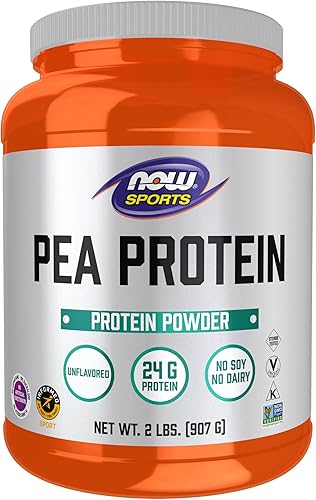
NOW Sports Pea Protein
NOW Sports
- 24 g protein per serving
- Unflavored, mixes into anything
- Pea protein is the best-studied plant source
- No added sugar or sweeteners
- Very low cost per gram of protein
Why we picked it: Pea protein has the strongest direct evidence among single plant sources, including a trial showing comparable muscle thickness gains to whey during resistance training. Unflavored means you can add it to oats or smoothies without fighting a flavour you did not choose.
Can Plant Protein Build Muscle as Well as Whey?
Broadly, yes — with a caveat. A randomized trial in resistance-training men found that pea protein produced increases in bicep muscle thickness comparable to whey over 12 weeks. Subsequent reviews have reached a similar conclusion: when total daily protein intake is adequate, protein source matters less than most marketing implies. The caveat is that plant proteins are generally lower in leucine, the amino acid that most directly triggers muscle protein synthesis, and some are less digestible. The practical fix is straightforward: take a slightly larger serving.
Why Blends Beat Single Sources
Amino acid profiles differ by plant. Pea protein is rich in lysine but relatively low in methionine. Rice protein is the mirror image — adequate methionine, limited lysine. Combine them and the gaps close. This is why most quality vegan powders are blends of pea, rice, and often pumpkin, hemp, or chia. If you buy a single-source powder, it is not a problem provided the rest of your diet is varied, but a blend is the simpler answer in one scoop.
How Much Should You Take?
General guidance for people training for muscle is roughly 1.6 grams of protein per kilogram of bodyweight per day, with little added benefit beyond about 2.2 g/kg. Because plant proteins supply less leucine per gram, a common recommendation is to make plant-based servings modestly larger — around 30 to 40 grams of protein per serving rather than 20 to 25. Spreading intake across three or four meals is more effective than concentrating it in one.
The Heavy Metals Question
Plant proteins are made from crops that draw minerals from soil, and testing programmes have repeatedly found detectable cadmium and lead in some plant protein powders. The amounts are usually small and the risk should not be overstated, but it is a real reason to prefer brands with third-party heavy metal testing, and a reason not to consume enormous quantities of a single product daily. Organic certification governs farming inputs rather than soil metal content, so it is helpful but not a direct guarantee.
Taste, Texture, and Digestion
Plant proteins are grittier than whey and have an earthier flavour, particularly pea. Blending with a banana or nut butter helps considerably. On the plus side, they contain no lactose, which makes them easier for many people to digest, and they generally carry more fibre. If you have been avoiding protein powder because whey upsets your stomach, this category is worth revisiting. For comparison, see our whey vs plant protein guide and our protein powder for women picks.
Frequently Asked Questions
Is vegan protein powder as good as whey for building muscle?
Largely yes. A randomized trial found pea protein produced comparable bicep muscle thickness gains to whey over 12 weeks of resistance training. The main difference is that plant proteins generally supply less leucine per gram, so a slightly larger serving — around 30 to 40 g of protein rather than 20 to 25 g — is a sensible adjustment.
Why are most vegan protein powders blends?
Because no single plant protein has an ideal amino acid profile. Pea protein is high in lysine but low in methionine; rice protein is the opposite. Blending pea with rice, and often pumpkin or hemp, closes both gaps and produces a more complete profile in one scoop.
Should I worry about heavy metals in plant protein powder?
It is worth attention, not alarm. Testing programmes have found detectable cadmium and lead in some plant protein powders, since crops draw minerals from soil. Amounts are typically small. Choose brands that publish third-party heavy metal testing, and avoid consuming very large daily quantities of any single product.
Which vegan protein is best if I buy only one type?
Pea protein. It has the strongest direct research support among single plant sources, including a trial showing muscle gains comparable to whey, and it is usually the cheapest per gram of protein. It is slightly low in methionine, which is easily covered by a varied diet.
Quick Comparison
| Product | Key Feature | Best For |
|---|---|---|
| Sunwarrior Organic Plant-Based Protein | Multi-source organic blend | Best Overall |
| Vega Protein and Recovery | Protein plus carbohydrate for post-workout | Best for Recovery |
| NOW Sports Pea Protein | Unflavored pea protein, lowest cost | Best Value |
Bottom Line: Which Should You Buy?
For most people: the Sunwarrior Organic Plant-Based Protein. Multi-source organic blend
Runner-up: the Vega Protein and Recovery. Protein plus carbohydrate for post-workout
Also great: the NOW Sports Pea Protein. Unflavored pea protein, lowest cost
Ready to buy?
Jump straight to our top picks on Amazon.
Sources & Research
This article was informed by peer-reviewed research and clinical guidelines. The Supplements Corner Editorial Team reviews published literature to ensure accuracy.
Dosage Reference
General guidance for resistance training is approximately 1.6 g protein per kg bodyweight per day, with limited additional benefit above about 2.2 g/kg. Because plant proteins are lower in leucine, servings of roughly 30–40 g protein are commonly recommended versus 20–25 g for whey. Spread intake across 3–4 meals. Choose products with third-party heavy metal testing.
Key Studies Referenced:
- Babault N, et al. (2015). "Pea proteins oral supplementation promotes muscle thickness gains during resistance training: a double-blind, randomized, placebo-controlled clinical trial. Journal of the International Society of Sports Nutrition.."
- Morton RW, et al. (2018). "A systematic review, meta-analysis and meta-regression of the effect of protein supplementation on resistance training-induced gains in muscle mass and strength. British Journal of Sports Medicine.."
- Pinckaers PJM, et al. (2023). "The anabolic response to plant-based protein ingestion. Sports Medicine.."
Medical Disclaimer: This content is for informational purposes only and does not constitute medical advice, diagnosis, or treatment. Always consult a qualified healthcare provider before starting, stopping, or changing any supplement regimen. Individual results may vary.

